This morning I was reading the NOAA Educational Newsletter and Kelly Drinnen, the coordinator for the Flower Gardens National Marine Sactuary and she had an interesting article on just what is coral. In it she writes “Steve Palumbi of Stanford University gives it his best shot with this great 3-minute Microdoc in which he explains that corals are, among other things, tiny animals that make skeletons big enough to be seen from outer space. We love this; it makes the underwater world a bit easier to understand, which we think is essential for conservation.” In the video, Dr. Palumbi explains coral and a coral reef using a coffee cup, a glass and a plumaria flower. He also cuts back to underwater scenes to demonstrate his points. I have to admit is is a very effective way to explain the nature of this small animal. You should watch it…it is only about 3 minutes long.
At the Office – Diving the Pathfinder Rebreather
Just another day at the office. at least that is what I tried to convince Ann was happening the past five days in Grand Cayman. One of our friends, Pam, even said that maybe they needed to “meet in our conference room.”
But really, I was in Grand Cayman to complete a training program on the Megalodon and Pathfinder rebreathers. You can ask Emma or Nancy, I was in class each morning and diving in the afternoon…you know skills, drills and well ok, some fish, corals and steel; one dive was on the Kittywake.
While I have a lot of experience diving the Megalodon rebreather, the real treat of this trip was to dive the Pathfinder in something other than the pool. Not that I mind the pool, but there is something more interesting about a vertical wall with fish, colourful corals and vibrant sponges. Remember, part of my training was swimming in the unit.
The Pathfinder is designed with a more recreational diver in mind. Underwater photographers will love this unit because it is small, easy to use and provides the advantage of not scaring the fish away with every breath. One of the things that appeals to me is its size and weight. The complete unit will fit in a carry on suitcase and will not require help from three of your diving buddies to put it in the overhead. For divers with camera, the unit is robust enough to go as checked luggage as well.
The unit can be configured with a standard over the shoulder set of counterlungs or with the new top of the shoulder counter lungs. One of the other configuration options is the diliuent bottle. You can configure it like a standard rebreather with the diliuent and oxygen supplies mounted to the canister or, alternatively, you can utilize the bailout cylinder as the diliuent thereby reducing the weight and simplifying the rig for the diver.
Unlike some of the other rebreather designs for more recreational divers which try to minimize any diver thought or input into the system, the Pathfinder is designed for a thinking diver. Since you can never fully factor out the human interface, Leon Scamahorn, designer of the system, believes that the diver should be included and involved in the system. This does not mean that the system is complicated but rather it needs some input from the diver during the set-up and initialization phases of the dive. Further, it offers the diver more options in dive parameters and uses.
While a purely “recreational” diver will love this unit, the Pathfinder is capable of moving beyond what we normally consider to be recreational diving. Leon designed the unit to have enough scrubber media and system capabilities for a diver to do a typical normoxic trimix dive (using helium in the breathing mix.)
So you are probably asking what did I think about it? It was a real treat to dive a lightweight but capable rebreather. The work-of-breathing, a performance measurement, is similar to that found in the Megalodon rebreather. What this means is that it is easy to breath in the horizontal position as well as upside down and while facing up at the surface. The electronics are straight forward and easy to understand both on the surface and underwater and they do a good job of controlling the oxygen set-point or level. I found the unit trimmed well so it was easy to swim with in the water and because of its size and weight it was easy to exit the water. The scrubber packs easily and the assembly is easy and straight forward. It flushes easily and takes minimal amount of time to correct the oxygen levels.
If you are interested in rebreahers, I think this unit is a good alternative for more capable and expensive rebreathers. It provides a lot punch and is ideal for a photographer or any typical “recreational” diver as well a diver wanting to venture beyond the recreational limits sometime in the future. The Pathfinder is a very capable unit and may be the only unit you will need for the style of diving you have in mind.
First Ever Sighting of the World’s Rarest Whale!
One of the world’s rarest animals, the spade-toothed whale, has now been seen for the first time in recorded history. A mother and calf beached and died in New Zealand earlier this week. Previously the only evidence that this species exists has been three bones pieces that have been found from the 1800s through the present. The bones were difficult to identify because although they were similar to other beaked whales, they did not fit any bone structures of known species. Originally many of the bones were tentatively identified as Gray’s beaked whale, which is within the same family as the spade-toothed whale. Now, after using mitochondrial DNA sequencing to compare the spade-toothed whale bones to Gray’s beaked whales showed that the bones were from a separate, unknown species, then termed the spade-toothed whale.
Whales of the beaked whale family (Ziphiidae) are amongst the most rarely seen whales and are one of the least known families. This is due to beaked whale’s ability to dive to extreme depths to find deep-sea fish and squid to eat. Beaked whales can dive over 800 meters deep and stay submerged for nearly an hour and half. Many beaked whales are rarely seen and many species are difficult to differentiate without close examination. Therefore, it is very exciting for scientists to finally be able to look closely at a spade-toothed whale to be able to fully differentiate them from other species. It is really incredible that for the first time ever-recorded humans are laying eyes upon a new species of whale. This is the final evidence to prove the current existence of this whale species, and even though we know much about the ocean, it is obvious we still have so much to learn.
Study Indicates Some Sharks Are Color Blind
A recent study by a group of Australian scientists has suggested that wobbegong sharks are color blind! Past studies that have tested color-sensing abilities in elasmobranchs (rays, skates, and sharks) have shown that some rays have color-vision, but it was believed that sharks were probably colorblind. This has now been proved in two species of wobbegong sharks and indicates the possibility of colorblindness in all sharks. But more species will have to be tested before conclusions can be drawn for more sharks.
The study looked at light-sensitive proteins in the light-sensing cells in the retina of wobbegong shark eyes. Different types of these light-sensing proteins, opsins, are used to detect various types of light and convert them into photoelectric signals. Animals usually need two types of opsins in order to have any color-vision. It was found that the two species of wobbegongs studied had only one cone opsin, concluding that their vision is colorblind. Many fish and other marine animals have color vision but this trait seems to be lost for certain types of whales, seals and dolphins, and it is unknown why large marine predators lost multiple opsins in their retina, and thus color vision. This new knowledge about wobbegong color sensitivity could have broader indications that many sharks are colorblind. This has important implications for the scuba, surfing and fishing industries, which can use this research to make their products less visible to sharks to promote diver, swimmer and surfer safety and make fishing lures that are more difficult for sharks to see in order to reduce shark by-catch!
Explore the Ocean with Google Maps!
Some of the newest technology related to diving has come in a form strictly for surface use, as Google Maps has recently expanded their Google Street View to the ocean and gone underwater to capture panoramas and videos of reefs around the world! Google Street View is an interactive program that allows users to virtually navigate streets, museums, and famous sites world-wide but has previously stayed on land. Google has teamed up with the Caitlin Seaview Survey to create images of 360o views of reefs, which will make phenomenal images of reefs and virtual tours of popular dive sites available to billions of people who have never experienced the underwater world.
Google hopes to make these dive sites accessible to users to promote interest and conservation of the ocean and the images will be added to an archive for marine scientists to use for studies of these marine environments. From September to December the project will travel down the coast of Australia taking thousands of images that will be continually uploaded new sites to Google Maps. Currently there are six sites available to view on Google Maps, including three sites at the Great Barrier Reef in Australia, two sites in Hawaii, and one of Apo Island in the Philippines.
This is especially exciting for me because I have been lucky enough to dive Apo Island on an Oceanic Ventures trip and it is so cool navigate those sites via the internet! Although these images are amazing, they pale in comparison to the true underwater world of Apo Island. So, although Google cannot quite compare to really experiencing Apo Island, they’re making great strides forward and making dive sites more accessible to non-divers and divers interested in previewing sites in a sustainable way!
You can see what I mean by going here.
Trip Report – Live Aboard Scuba Diving in Belize
The Belize Sundancer Adventurers are on their way back to Houston, they are all sad to see their week of fun and adventures being replaced by emails and text messages. (@#$%& Internet). But despite the return of reality. the trip was awesome with 26 dives, and over 35 hours of bottom time for all!!!
Looking back on the week there were some fun things and some memorable notes. Karen loved her new second strobe, Steve loved his new strobe and tey both have the photos tp [rpve it. Mike promised to have an awesome YouTube video for us of fish and divers including a feeding octopus on one of the night dives. ( You will have to wait for a future post to see this one — video takes a little time to assemble.)
Zaide once again ran out of socks to lend everyone…thanks Z!!! (Alex will be stocking up on socks so everyone can have a pair.) Gordon helped the new divers find their way back to the boat so they could lose track of boat “bus” stop and just enjoy the fish while Kris helped refresh Ann’s memory by looking in her logbook to see if they were correct that they had met the Cpatain, Eddy, on a past trip when he was the dive master of the Bay Island Aggressor when it was moved to Belize especially for our group.
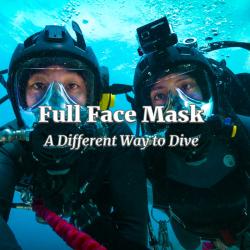
Thinking about Half Moon Wall I found it even more beautiful than I remembered it from my last dive here in 2003. Sofie arrived with only 6 dives and became an Advanced Open Water Diver on the trip!! Congratulations Sofie!!! Steve completed his 100th dive and Bill his 300th dive. And speaking of Bill, he & Debbie learned to really like their new full face masks. Bill was even hear to comment that Debbie did not talk as much as he thought she would but he was happy for the communications device when the shark went by; Bill didn’t miss it while he was taking photos of blennies.
Barbara and Barney were first in the water on all of the dives save for one and met their goal of photographing spotted eagle rays. Rich was awarded the best buddy for a photographer and he and Steve prompted Ann to offer a Marine Life Id course while on board.
Two cylinder man, John, and Sharkbait Karen were able to finish Ann’s fish-id check list on one dive, at 30 feet under the boat without moving more than two feet. Great Lion Fish Hunter Jess assisted by Mike suggessfully removed 35 lionfish from the reefs. Steve commented that there were more little fish this year and less lion fish. An autompsy of the lionfish showed why….their favorite meals were sergeant majors, juvineele runners, and gobies.
Chef Jerry feed us wonderful local Belzian dishes, fresh fish or stuffed pork chops, peanut butter chocolate chips bars, fluffy rich cheese cake, and even turkey dinner. Karim, John Eddie and Jerry lead the dives, photographed the fish and the guests, and waited at the ladder for up to an hour for each guest to get out of the water after leading dives just to help take off our fins and hand up equipment. Waiting at the “bus stop” for the hang bar to swing was almost as much fun the ride the bar for the safety stop.
The comment after tubing sums up the week: “Where are we going next year?” This says it all…great time, good friends, aweomse crew, memorable vacation.
My only comment is why wait until next year?
Thanksgiving, Jazz and Antiques
“It was a champion day today when I got up and I’m carrying it with me all day!” I heard this comment from a gentleman while we were touring the Negro Leagues Baseball Museum in Kansas City. Yes, Ann and I took a non diving vacation, all be it a short one for the Thanksgiving holiday. We spent the Holiday visiting my brother, Jason Keibler, inKansas City and exploring some of the sites around town. The Negro Leagues Baseball Museum is fascinating with photographs, films and stories from league players and promoters. In the center is a baseball diamond with large bronze statues of some of the greats in the game at their positions on the field, much like an all-star team.
Another stop was the American Jazz Museum (which happens to be next to theBaseballMuseum). Here you find recordings, instruments and costumes from great players including one of my favorites, Louis “Satchmo” Armstrong. While many of the listening stations did not work, the museum was interesting and tracked the changes in American Jazz.
Jason then continued on the Jazz theme by recommending drinks and live entertainment at the Phoenix Jazz Club on 8thstreet. While we listened to Lonnie McFadden and later to Dave Stephens, the Makers Mark Manhattans, gin and vodka martinis were served expertly prepared by Jessica and Cat who constantly mixed libations for a bar full of Jazz enthusiasts. Jessica also manages the club so she was often called by name to the stage for comments and banter with the musicians, especially Dave Stevens.
We had only intended to stay for a few drinks and then move on to another dinner location, however, we were having such a good time listening to the music and talking to others in the bar and among ourselves that we decided to stay. Of course Cat told us we really had to stay to listen to Dave because he put on “a really fun show;” so bowing to pressure we had dinner there and finished the evening at the bar. If you are ever inKansas City, you really have to drop in for some cold beverages and some cool Jazz. Be sure to tell Jessica that Ann and Eric, the scuba people fromHouston, sent you. You will not be disappointed.
A trip toKansas Citywould not be complete without a visit to Kincaid Antiques. Cindy always has some unique items in her store and some sale squirreled away in her basement. It is a treat to visit with her and look at some wonderful pieces of history. Of course, no one left empty handed.
Ann and I are back are inHoustonnow; and, I have to return to my diet. Luckily, we left all of the extra stuffing, mashed potatoes, pecan pie, etc. at Jason’s house. So, even if I was tempted, the food is not here. Instead or craving more food, it is time to help people complete their Christmas and Chanukah wish lists (hint, hint). So, if you need help with your holiday shopping – Dive Mom is back!


Follow Us!