100 Scuba Dives…Dive Mom Needs Help!

Dive Mom Ready to Go
Dive Mom Ready to Go!

“For the first time I can remember, I don’t have my 100 dives by November 1; I need your help to get there before December 1!”

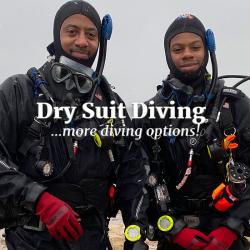
 Ann Keibler will be venturing up to the DUI Dog Rally and Demo Days in Terrell Texas on November 19-20 and she would like for you to join her. So that you both have something to do while swimming around the lake, she will be doing dry suit open water dives and dry suit demos. To give you some incentive to show up, she has come up with the following specials:

  • Take a Dry Suit course, reg $225, for only $125 and she will pay for your DUI entry ticket for Saturday and Sunday. By doing your open water here, you also save the dry suit rental charge ($100 for the weekend).
  • Take your Nitrox course, reg $225, for only $125 and she will pay for your DUI entry ticket for the day and include the Nitrox for your dives!

Both courses include the educational materials and the classroom portion is a home study program. You should turn in your homework and take the test before you leave. She will be staying late Wednesday November 9, so you can get the test over with early. You can take the test at the lake, but who wants to skip the fun and take a test so doing it early is really better.

Of course if you are already certified as a dry suit diver, you can still come up and go diving. Remember, she needs a lot of dives and she doesn’t think any one person will want to do that many in a day. As such, she needs multiple buddies and lots of moral support.

DUI’s Dog Rally and Demo Days is a really cool event where you can try almost every suit DUI makes, almost every style of undergarment, get lunch and a hat all for $10.00 (when purchased from Oceanic Ventures, in advance). And, if you are already a DOG (DUI Owners Group) and you bring a friend to the event, you will get a special gift.

Please send Dive Mom and email and tell her you will help her reach her goal.

She would like to know who is going to attend by Friday.

Why should you take an Advanced Open Water Scuba Course?

Lift Bag by Chuck GerlovichNew divers often wonder how they can start an Advanced Open Water Course so close to completing their Open Water Course; they simply do not feel like advanced divers.  While it is true they are new to the world of diving, and they need to go out diving, it is also true that having a few more underwater skills under their belts would make diving more enjoyable.  This is really what an Advanced Open Water Course is all about; it is a combination of diving specialty courses designed to give new divers a few more underwater tools.

There is no substitute for simply going out and diving.  After you complete your open water class, you and your diving buddies should plan on going diving as much as possible so you can gain some confidence and put your newly learned diving skills to work.  At our facility, we try to promote this by offering dive local weekends at other times during the month.  We also encourage new divers to return with us on the next month’s Open Water Weekend.  By participating in these other events, there is a professional dive leader on hand to give you advice and to answer your questions while learning to dive outside of the classroom setting.

But, like I said earlier, one way to make an improvement in your diving is by learning some basic underwater skills. An Advanced Open Water Course combines the following specialty classes into one package:

  • Underwater Navigation
  • Deep Diving (over 60 feet)
  • Night and Limited Visibility Diving
  • Search and Relocation

 These specialties are designed to introduce you, the new diver, to new environments and equip you with come new skills that you will use throughout your diving career.  They are also tailored to give you more confidence and help you to relax more underwater.  Why these specialties you ask?  Well, let’s look at each of them in more detail.

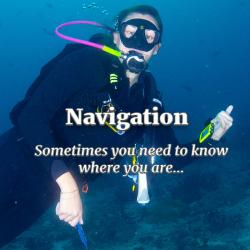
Underwater Navigation – You probably noticed in your Open Water Class that you had no real idea where you were.  You just followed your Instructor or a Dive Control Specialist with your Instructor following behind.  You were mostly concerned with trying to maintain buoyancy and look around at things as you glided past.  However, when you are diving without your instructor, you will have to find your way around the lake on your own.  This course introduces you to the skills needed to navigate underwater and the ability to get lost creatively.

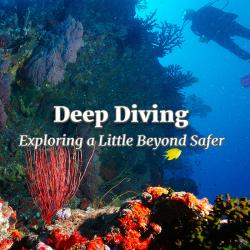
Deep Diving – While many people do not consider diving deeper than 60 feet deep diving, you were trained and certified in 20 to 40 feet of water so 60 feet is deeper than you have been.  Assuming you do not want to repeat those out-of-air skills you were forced to endure as part of your Open Water Program, there are some things you need to consider when diving deeper, like when to start back to the surface.  So here you will learn what to do to scale the equivalent of a 6 story building and return to the surface safely and proudly.

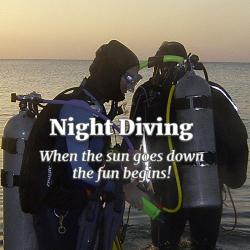
Night & Limited Visibility Diving – Here you get more toys!  You need lights to complete this specialty so, boys get toys!  Ok, it is not all about the toys but rather how to use them as tools to safely execute a night dive.  And remember, if you are ever planning on sneaking into the cocktail party from the water, you will need this skill-set.

Search & Relocation – With the introduction of more toys comes the need to find them when you loose them.  Here we introduce you to the fine art of finding the things you lost underwater.  As part of the class you also get to use a lift bag to lift up a heavy object.  This is a useful skill if you run across an canon underwater that you think will look smashing in your front yard!

While you are learning these skills, you will be getting more comfortable underwater and may even find you do not need as much weight to sink below the surface.  You even get the opportunity to purchase some necessary toys to safely execute your dives – cool, more toys!

Taking an Advanced Open Water Course is a good way to prepare yourself for the dives that you want to do on your next vacation.  The comfort you gain in the water will make those vacation dives more enjoyable and just plain fun.  Don’t miss this opportunity to improve your diving while having fun diving in a structured program.

The Importance of Buoyancy Control for Scuba Divers and Photographers

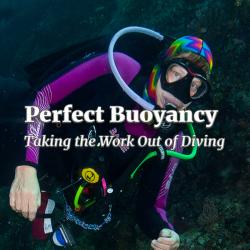
To be or not to be…Buoyant that is.  With all due respect to the Bard, in reality, neither is appropriate- when we dive, adhering to the Third Rule of Scuba, “Maintain Neutral Buoyancy at Depth”, is clearly important and possibly, no more so than when we think about taking photographs underwater.

In our Open Water Diver training we learned the critical Three Rules of Scuba.  Continuous breathing is absolutely a requirement for our safety, as is a slow, controlled ascent and a safety stop.  So, how does Neutral Buoyancy really figure into this?  Aside from issues related to a saw-tooth dive profile, maintaining proper (that is, neutral) buoyancy is important for other reasons.

On a typical open water dive, we drop in and descend to a depth, a feature or some other pre-determined point, and as we recall from the dive briefing, we have a dive profile that we intend to follow, which is to say that we have a maximum depth and time for this specific dive.  The depth is important for nitrogen loading in our tissues, as is time at depth, and we figure a profile to ensure that we are diving safely and within recreational limits.  So, maintaining the depth as per the plan has some obvious logic.

Aside from adhering to the depth limits we resolved in our dive plan, we also want to think about what we’re going to see on our underwater tour.  Again, in the dive briefing there was discussion about what we might expect to see on this dive, so there is a need to be aware of the depth at certain points during the dive, such that we can see the features.  Having neutral buoyancy is important here, as if we are drifting up or down, we are less likely to see the feature.  Further, if we are struggling with buoyancy, we are much more likely to make contact with the reef or other underwater structure, possibly causing damage to that or injury to ourselves.

Photography is not much different from seeing with our own eyes.  The camera, whether digital or optical, records the light reflected from the subject, and captured on the film (or CCD), just as it was captured by our own eyes.  The camera allows for a myriad of possible adjustments to compensate for spectrum absorption and in fact, our eyes make the same sort of adjustments, though we are less aware of them at the time.  But, when we are looking at an object our eyes need time to sort out the contrast, look for the details of the object, adjust to the lighting, etc.  In an underwater environment, our mind is less familiar with the situation and thus slower to resolve the details- seeing that shrimp can be a challenge at first.  Experience helps, of course, as the mind becomes trained and better able to process the information.

Nonetheless, even with our own eyes, we need a few seconds to process the information and to actually “see” the object.  That demands our ability to focus on the area of interest, differentiate the background from the subject, resolve the textural differences, and finally, see the subject.  This requires some stability to our point of view- if the area of interest has shifting features (light, distance, contrast) it will be very difficult for our eyes and mind to process the dynamic data and capture the image.  Shifting features certainly can be caused by moving to and fro, as well as up and down.  Now, I think you can see where buoyancy has an impact…

Just as our eyes require some time to adjust to the environment, and our mind requires some time to process the information presented to it, a camera will require some time to adjust for the lighting and resolve the focus before the shutter trips.  In some systems, this could truly be a few seconds.  OK, so now imagine that you are drifting up and down with your breathing…how will you capture that award winning image?  Keep in mind, too, that in most underwater photography situations, just as our eyes require time to resolve the light, texture and contrast, a camera needs time to do the same, and usually this only happens once the shutter release is pressed.  If the camera moves relative to the subject after the shutter release is pressed the focus and lighting might not be correct.  Further, the shutter speed is likely to be quite slow so camera movement will result in a blurred image.

Let’s go back to a few basics here, keeping in mind that photography is not that much separated from seeing with our eyes.  Humans are in reality poor multi-taskers, and especially if something has captured our attention.  In a driving situation, our attention can be easily diverted by something we see, causing our focus to shift from something important, like which lane we are in.  In a diving situation, if we are focused on an object we are likely to stop paying attention to other matters.  We know that if we stop to communicate with our buddy underwater, we are going to forget direction, buoyancy or something else.  So, when we stop to look at an object we are likely to forget about our buddy, direction, buoyancy, etc.   We need to start reducing variables very early, to prevent our dropping onto the reef, or ascending, or losing our buddy.  What variable can we easily reduce?  Buoyancy!

If we return to the “3 Rs” of scuba, the first thing we want to do is to regain control, so when we stop to look at that object, we are in control of our buoyancy.  If we control buoyancy as an autonomic response, our mind can pay attention to the object and, if we are taking a photograph, we can maintain our focus on the object and capture a good or even great image.

Poor buoyancy control presents a number of problems:

  1. Potential unintended contact with and damage to the reef
  2. Potential unintended contact with a wreck or other structure, with risk of injury
  3. Spooking or injuring marine life
  4. Being unable to clearly see the feature
  5. Being unable to capture a good photograph of the feature

Good buoyancy control allows us a number of benefits:

  1. No risk of unintended reef contact and damage
  2. No risk of unintended structure contact or injury
  3. Marine life is at ease and can be readily observed
  4. We can actually see the feature
  5. We can capture an good photograph of the feature

Good buoyancy control means that we are neither rising nor falling in relation to the feature, and that we are standing off the reef or other structure.  Further, it means that our eyes and our mind can pay attention to the feature and truly see it.  Finally, if our eyes and mind can resolve the feature, we have the time needed to properly compose a photograph, be sure that our camera is set correctly, approach the marine life cautiously, allow the camera to adjust to the specific situation, allow the focus to be set and the shutter to trip.

Good buoyancy control means stability underwater.  It promotes good diving posture, better gas management, less exertion and more opportunity to do what we set out to do in the first place- see things in an underwater environment, undisturbed.

Good buoyancy control takes time and practice.  Great buoyancy control takes a lot of time and a lot of practice.  It’s a combination of breathing control, body positioning, weighting, equipment configuration and concentration.  If you want to get some great underwater shots, think about first working on your buoyancy control before you pick up that camera.  If you need to work on buoyancy control, consider a Scuba Skills Update, some local diving, or a specialty course.  At OVI we are always ready to do help you improve your skills and enhance your diving experience.  Let us know how we can help you.