
Next Stop – Chuuk FSM
Eric Keibler Aug 29, 2009
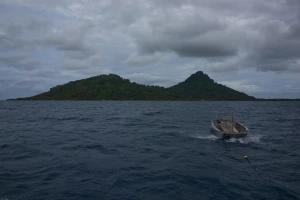
This is my sixth visit to Chuuk in the Federated States of Micronesia, with the first in February of 1998 and each time I visit I find that little has changed. The roads are still full of potholes, the streets still have old abandoned cars scattered about and air conditioning in the transfer bus still does not work. But the people are still smiling and welcoming. The air even around the airport is filled with the sweet scent of flowers growing on the hills.
The fun of returning to a place you have been before means that you know what to expect when you arrive and that you have the possibility of running into old friends at the most unlikely spots. While our group was being me by Captain Lenny Kolczynski and the
current crew of the Odyssey, I was surprised to find Gardena Aisek at the airport. She and her family own the Blue Lagoon Resort. She was at the airport to meet a student she was sponsoring to Xavier High School, a Jesuit High School and boarding school for gifted students from all over Micronesia. In the few moments we had before we all needed to go our separate ways, I found that she is now teaching at the College of Micronesia, that her daughter Christinia has moved in with her brother in Guam and that her other son, Advin, is now running the hotel. Her family is doing well and she is really enjoying her new career as a Professor.
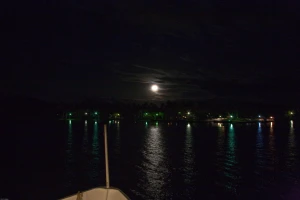 Bright September Moon Over Weno
they were only the engineers, it was the local peoples who prneuded the labor necessary to realize their protector’s dreams.
The island of Tonoas, renamed by the Japanese to Dublon, was to become the center of culture and civility in the islands, with mneue theaters, housing and restaurants. They built a system of water pipes to bring the fresh spring water from the top of the mountain down to the town and the loading pier (Dublon in Chuuk was the source of fresh water for many of the Pacific islands in the area). They electrifies the island by stringing electrical polls around the island and they allowed the locals to help with their day-to-day activities.
Today, little of this physical presence in Tonoas remains. The water system, still in use is crumbling and beginning to fail, the electrical poles still exist but the power generation plants have long since ceased to work and all that remains of the towns are a few buildings scattered around broken slabs and fire hydrants. A former sea plane base houses a school and the old hospital serves as a housing complex for about 10 families.
The main island in Chuuk is Weno, known as Moen to the Japanese. This is where the Americans established their presence after the Japanese surrender of the islands. Home to Anderson field, now the Chuukese International Airport, this island developed into the main power center for the island group. Like the other islands in Chuuk, little remains of the physical presence of the Japanese occupation. Xavier High School is located in the old Japanese communications bunker complete with its blast doors and reinforced walls. But while the physical presence of the Japanese occupation has faded from the landscape, you will still find influences in the culture and diets of the people. Rice is a feature of many meals as are “stir-frying” cooking techniques.
The Japanese and the Americans are responsible for our reason for visiting this far flung atoll. In 1944, Operation Hailstone prneuded the Chuukese with a tourist draw like no other place on earth. For several days, American fighter planes and bombers sunk a major portion of the Japanese merchant fleet and sent three small destroyers to their watery graves. The loss of life for the Japanese was incredible as was the loss of this strategic port.
Today the sounds of war are silenced but the ships remain…an ever present draw to divers from all over the world. It is these wrecks we have flown over twenty hours to see and after a little sleep in a comfortable berth aboard the M/V Odyssey, I will begin another visit to Truk’s famous Ghost Fleet.