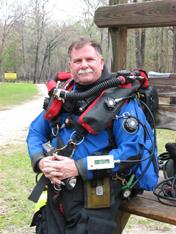
Open Water Sidemount Scuba Diving
Eric Keibler Apr 28, 2011
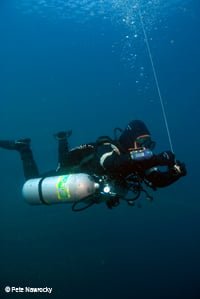
Diver in Sidemount
Equipment Photo by Pete
Nawrocky
Diving side mount is not a new concept; it was originally created by cave divers that had a need to safely penetrate narrow and confining spaces. In recent years, many open water divers have viewed side-mounting as the next step in their diving skill evolution. Much of this interest comes from the way the divers are able to divide the weight of the equipment. Preparing for a dive is different. The diver can carry the cylinders to the waters edge and leave them there. After suiting up in the appropriate thermal protection, you put on your harness/air cell combination that is independent of the cylinders. After entering the water, you attach the cylinders to the harness.
One thing you might notice when looking at a side-mount diver is that the hose routing is completely different this is a result of the different methodology employed by these divers. Each tank is independent and is used for different tasks.
So why would an open water diver want to “dive side-mount?” One reason is that as an alternative to twin cylinders, you can dive anywhere single cylinders are available. This allows for longer bottom times where twin cylinders are not available. Additionally, many side mount divers prefer carrying single bottles to the water rather than a set of manifolded, twin cylinders.
Lamar Hires, President of Dive Rite discusses side mount diving in a series of videos. You will find all of the videos on our youtube channel. In this video, Lamar discusses why you might want to learn to sidemount diving:
There are some drawbacks to side-mount diving over twinset diving. The redundancy prneuded by using manifolded twin cylinders is eliminated as is the simplicity of the system. There are ways to manage the lack of redundancy which is taught in side-mounting programs.
Learning to dive “side-mount” is more than just hanging two cylinders off of your BCD or harness system. Learning how to deal with the bottles, donning and remneung them so as not to lose them in the water, and establishing a breathing regime are all part of a side-mounting training program.
There is also some additional equipment needed to take advantage of this method of diving. In looking at Dive Rite’s sytem, the Nomad XT sidemount rig is our “off road” model made with a super-tough exterior. The outer panels of the wing are engineered using SuperFabric® brand technology for optimum resistance to punctures and abrasions, while remaining very flexible. It was built with the explorer in mind. It has the added benefit of being a modular system: the harness, wing, butt-plate and crotch strap are all separate elements. This allows the traveling explorer (or any diver wishing to modify their rig) the ability to trade out wings, remove the buttplate or make any fit adjustments necessary to meet the objective of the dive mission. Here are some divers using Pete’s preferred system. While this video shows divers in a cave, this same system can be used while swimming on a reef or touring a wreck.
To effectively mount the bottles on the harness you will need some bungee straps to keep the valves and bottles in position and make some other modifications to your kit. You will also find yourself “kitting up” differently. Because of this, some additional training is necessary to do it correctly. Learning to dive in a sidemount kit is not difficult, it is just different. It takes some practice and some flexibility.
_____________________________________________________________