Travel and Adventure Photography – Nine Hints for Underwater Photographers
Eric Keibler Feb 16, 2016
In reading Helen Jung’s article, Secrets to Traveling like a Local, I thought about how to apply some of her hints to diving travel photography. We have a lot of the same issues but when you add underwater photography to the mix, it opens a whole new world in travel photography. Here are some hints I came up with:
Study before you go.
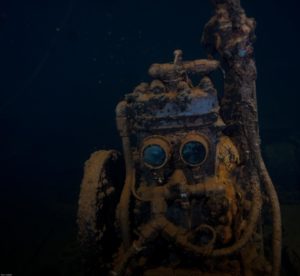
You should look at what others have done so you have an idea of what iconic photographs represent the location. If you were going to Paris, you would want a photograph of the Eiffel tower. The same applies to your underwater trip. What creatures, people, and places did others find interesting? Finding out where these things might be located will help you capture images that encompass your trip.
Ask Questions.
Talk to people who have been diving there and find out what they found interesting. Keep an open mind. You might not be interested in a Japanese Communication Bunker in Chuuk but the view from the top is wonderful.
Talk to the Dive Master.
Remember, local knowledge is a big plus in photography, especially in underwater photography. I remember one dive in Chuuk, where I went on a photography dive with Todd Emmons, the lead Master on the Odyssey. He led me through the ship and acted as the model for a series of photographs. I still had to interpret each site, but he knew where others had made beautiful photographs in the past. He also had some new places where he thought there was potential for some fun photographs.
Force yourself to push the envelope.
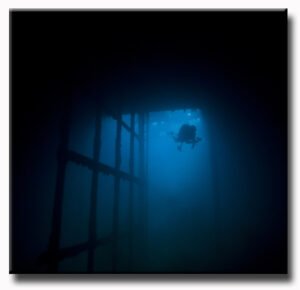
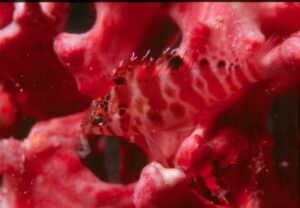
I am a die-hard wide-angle photographer. I love the expansive scenics both above and below the surface. However, many locations are really best captured using a macro or super macro lens. So, while I can always fall back on wide-angle, I have to force myself to concentrate on Macro photography. This was especially true in Indonesia where there are some incredible opportunities for Macro photography.
“Don’t be a Jerk.”
I cannot stress this enough! I can write an entire article on being a good photographer underwater but I will just touch on a few things for now. You need to be respectful of the people, places and the environment. This is especially true underwater where the marine life is fragile and very susceptible to damage. If you cannot get the shot without damaging the surrounding coral or other creatures (this includes hanging on) then pass on the shot or approach it a different way. You have to be aware of your body position, fins, hands, etc so that you don’t damage the surrounding environment. Another aspect of this is being respectful to the rest of the group. If you are diving with a group, you owe it to them to remain a part of the group and not lag too far behind. You may to have to pass on some shots to make up for the one you just took in order to stay with the group. If you find this difficult, hire your own Dive Master and boat and you can then set the timing of the dive.
Talk to your taxi driver and other locals.
Remember, they know a lot about the area you are visiting. They can be a good resource for fun things to do and entertaining things to see and do. They can also be your pathway to understanding the local culture and customs more which will help your photography.
It is ok to be a tourist.
You are a tourist after all so it is ok to be one. Don’t miss some of the touristy spots because some of them are really fun. If you want a challenge, get the classic shot and then find different ways to portray the spot in your images. Ask Ann, she loves macro photography and sometimes tree bark can be cool.
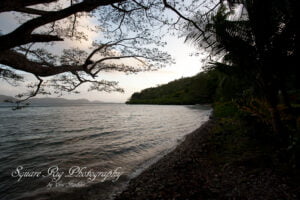
Get up early and stay up late.
There is nothing like a sunrise or sunset right? Well, it can really be special to be up when it goes from dark to light even before the sun starts to rise on the horizon. Photographers call this the “Blue Hour” and it occurs twice a day – before sunrise and after sunset. The lighting is magical so don’t miss it. You can always take a nap or sleep when you get home.
“Give yourself permission to look and act foolish sometimes.”
“It’s OK to ask for help or not to know how to do something. You’ll get more out of a trip if you put those reservations aside.”
In both travel photography and underwater photography, we try to tell a story. There is always a story, we just have to find the one we want to tell but that is a thought for another day…