Travel Log – Scuba Diving in Truk Lagoon Finally
Eric Keibler Apr 27, 2012
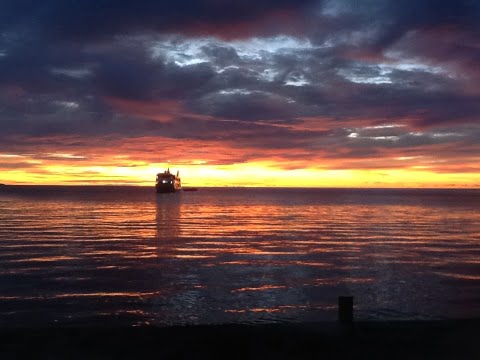
The weather system we avoided in Kosrae seems to have followed us to Chuuk. The basic schedule is It rain overnight, clearing slightly in the morning until just the point where we are loading the boats to go diving and then a small squall runs through kicking up the seas and making for a wet ride out to the dive site. The skies and seas remain a little disturbed while we are underwater and then just after we re-board the boat after our decompression stops, the seas lay down making the ride back to the resort a smooth affair.
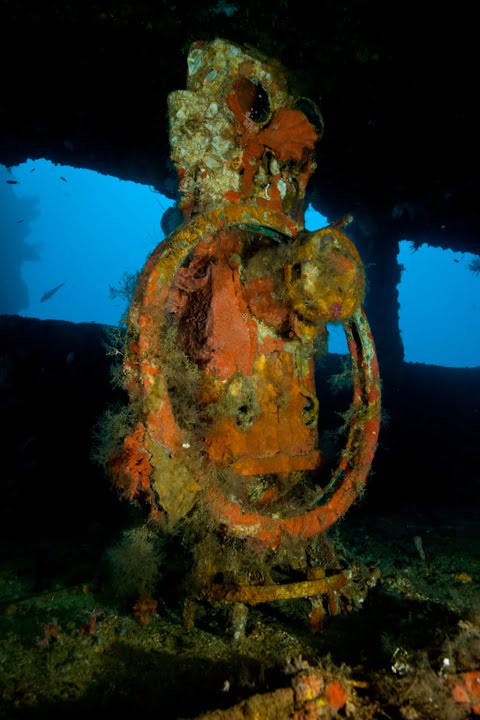
We have had some great dives during the shore based portion of our trip. We started with the Fujikawa Maru, which is a spectacular wreck with lots of sea life and coral growth. The engine room and forward holds were a little murkey, probably as a result of divers who were there before us. While the zeros are still there, they show signs of deteriation. It really demostrates that things built for a terestrial environment are not as well suited to life iunderwater.
Because we were here earlier than we had origionally planned, the group decided to dive the deeper wrecks in Truk Lagoon, especially since we will not be visiting them next week. We also decided to do some of the dives using Helium. Using Helium out here is a mixed blessing. It makes for a clearer head and safer diving but there is a price to pay. First, Trimix diving generally requires longer decompression times when compared to air diving which means that we all have to get used to hanging around in shallow water and looking at one another,
Of course the biggest price to pay will come on Sunday when the Blue Lagoon Dive Shop presents us with our diving and gas bill. Helium is $4.50 per cubic foot! The rebreather divers are each using about 7 cubic feet per day while the open circuit divers are using about 38 cubic feet per day. Lest we forget, there are also the oxygen and the bottle rentals. Deep diving in the tropics can be expensive!
I have also come to realize that in order to successfully dive in remote locations, you not only have to be a compotent diver, but you also have to be part mechanic and part dreamer, with a good dose of MacGuiver tossed in. We have already had our share of equipment glitches and malfunctions. Some we have had the spare parts for and others we have not. Parts are not readily available in this remote part of the world but Pam is arriving on Sunday with some parts to make our repairs easier and more permanent. I am already compiling a list of things I need to add to my expedition kit.
So far we have dove the following wrecks:
The Fujikawa Maru,
The Hein Maru,
The Shotan Maru, twice,
The Nippo Maru, and
The Fujisan Maru.
And for all of those fish lovers we have seen a large school of Baracuda, Tuna hunting, Eagle Rays and lots of small reef fish. Alex was so popular with three little yellow stripped fish that they followed him all the way around the wreck and up to his 10 foot stop. It was like having a bunch of high school girls following him around; the only thing missing was the fish trying to flirt with him.
Great diving and good friends, what more can you want. Ok, it would be far better if Ann were here instead of manning the store at home but the world is not a perfect place.
The diving continues…