
Travel Tips – Packing Light and Healthy
Eric Keibler Aug 10, 2011
Today’s post comes to you from Thomas A. Mackey, PhD, ARNP-BC, FAAN, FAANP with UT Health Sciences
It’s the savvy traveler who packs light. Who wouldn’t want to board a plane with only carry-on luggage? The trick is to find that perfect balance between taking essential preparedness items and breaking the bank with airline charges for checked baggage. Let’s review some essential travel items and what to leave at home.
Documentation
In terms of documents for foreign travel, you’ll find it well worth the space to pack a copy of your passport. These documents are much easier to replace if you have a copy available. If you are traveling to a country that requires yellow fever vaccination, take the record with you; otherwise leave the record at home safely filed away with other health records. Consider wearing medical alert jewelry to identify any serious medical conditions such as: serious allergy to penicillin or bee stings, insulin dependent diabetes, or severe asthma.
First Aid
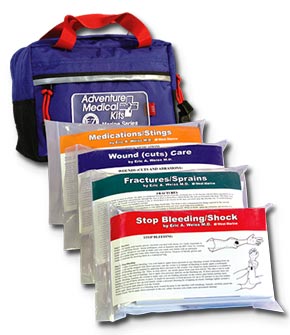
Complete First Aid Kit
There are many packing lists and prepared travel kits for first aid that are very comprehensive. The advantage of purchasing a commercial travel kit is there is usually a large variety of supplies in small quantity allowing the traveler to cover a number of contingencies with a fairly compact package. Travel kits usually have a small first aid reference giving instructions on how to treat a broad range of illnesses and injuries and how to use the supplies in the kit.
One important thing to remember about a travel kit is that up-keep is required. Many of the unit dose medications contained in the package have an expiration date. These will need to be replaced along with any other items used on the last trip prior to traveling again. Small quantities of unit dose medications are readily available but tend to be expensive. Consider this in your decision to purchase a travel kit.
For the adventurous traveler who will be in remote places with exposure to outdoor hazards, a travel kit is well worth the investment. Many travel kits are tailored for specific adventure style travel including: salt water marine, rock climbing, backpacking, and kayaking. These kits not
only have supplies you need like a snake bite kit and the reference manual is specific to the hazards you are likely to encounter.
For travelers who will be within an hour of emergency medical care or you are on a hosted vacation where the tour guide has first aid training and a kit, convenience would be the only reason to purchase a travel kit. Pack a small complement of the first aid items that you keep around the house. Remember, “common things are common” and pack for the first aid issues that commonly happen to you at home like minor cut and scrapes, blisters, headaches or body aches, nasal congestion and allergies. No need to carry the whole package, just pack enough to manage the event without disrupting the itinerary in search of treatment for a headache.
The one item anyone traveling outside of the U.S. should take along is treatment for diarrhea. It’s not a pleasant topic but the fact of the matter is that diarrhea is the most common illness experienced by travelers outside of the U.S. Unfortunately, diarrhea can strike without warning and could make it difficult go out in search of a pharmacy. Don’t leave home without a box of over-the-counter anti-motility medication such as Imodium AD. Ask your primary care prneuder for a prescription antibiotic to take with you.
Speaking of prescribed medications, don’t forget to get your routine prescription medications filled well in advance and pack these in your carry-on luggage. If you have life saving rescue medications such an epi-pen or an asthma inhaler, take an extra along in case of loss, mechanical failure, or any number of other calamities. Do not pack them in checked luggage. Carry them on the plane with you. It could make the difference between a life and death situation and a mere hassle.
Insect Control
Mosquitoes and insects are more than a nuisance. These can carry serious diseases such as malaria and dengue fever. Insect repellent can be purchased in individually packaged towelettes. This is a compact way to carry insect repellent without risking leakage during the flight. Look for an insect repellant brand that is greater than 30% DEET and plan to apply every 4 hours while mosquitoes are out, especially dawn, dusk and after dark. Bathe every day and you should have no risk of toxicity.
Another measure for insect control is to spray all of your clothing with permethrin spray. The spray can be purchased in the outdoor section of stores as tick repellent or in the pharmacy section of the store as lice treatment for furnishings. Before you leave, spray your clothing (no need to spray under garments) with a light spray as if you were spraying on starch before ironing. Allow the spray to air dry and pack your clothing. The permethrin will last multiple washings on the clothing but will not stain or have an odor. Do not spray permethrin directly on the skin because it can be a skin irritant. Treating your clothes with permethrin is an added measure for mosquito prevention and will deter chiggers, gnats, and flys.
Hygiene
Last on the list is an important hygiene product that might keep you from becoming ill by transferring germs from environmental surfaces to your eyes, nose and mouth, and that is alcohol based hand sanitizer. It is sold in convenient packaging in small bottles or as spray pens. There is no reason to be obsessive compulsive about it, just use a little on your hands before you eat and when you know that your hands are dirty. Avoid touching your eyes, nose, and mouth during the day along with the hand sanitizer use for good solid prevention.
Your healthcare prneuder is an excellent resource for travel preparedness. Depending on the location and style of travel, you prneuder may recommend additional medications for treatment of bacterial diarrhea or malaria prevention. Your prneuder is also an excellent resource on required and recommended vaccines for travel. Call your prneuder today or come see us at University of Texas Health Services (713) 500-3248. We prneude travel health services to hundreds of patients every year. Happy travels!
Thank you to Susan Parnell, MSN, MPH, CIC and Thomas A. Mackey, PhD, ARNP-BC, FAAN, FAANP