
Scuba Diving - the Dive Around Texas Event at Blue Lagoon
Eric Keibler Apr 20, 2026
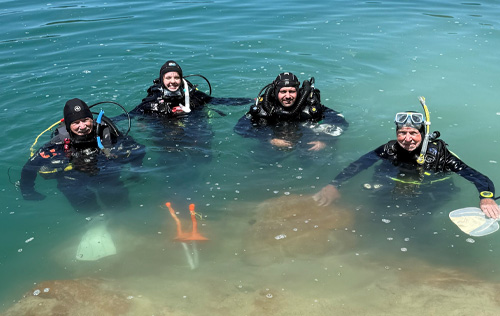
The weather sounded ominous, but like any day in Texas, just wait! Sunday was the first Dive Around Texas dive up at Blue Lagoon, and we had a small crowd of divers ready to start their local diving.
To make the event even more interesting, Joe had some trivia about the lagoon to help the divers get in the right frame of mind for their exploration. Later, he directed them out to find the remnants of the mining operations still visible in the lagoon. Do you know what you might find while scuba diving in the Blue Lagoon that dates to the mining era?
How are you at answering trivia?
- When did the Quarry, now known as the Blue Lagoon Open, open?
- What was the primary purpose of the stone that was quarried from these lagoons?
- How was the stone moved to that location?
- Why did the quarry close?
- When did the diving version of the Blue Lagoon open?
- Why was the water bright aquamarine for so long?
- Why has the color changed?
- Are there features that date back to the original quarry still visible in the lagoon? If so, what are they?
The Huntsville 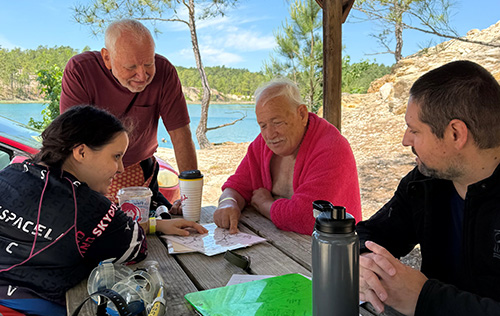 Quarry began operating in 1893 to supply limestone for the extension of the Sabine Pass jetties. The stones were moved from the site and loaded onto specially built standard rails to transport the store to the existing rail network that served Sabine Pass. In the early 1900’s, this project was completed, and no other major Government projects required stone. With only light demand and the cost of pumping out the spring water, the quarry became unprofitable.
The lakes became a popular “swimming hole” for Huntsville State University students and residents. In 1984-1985, a group of divers leased the property and created the “Blue Lagoon” to serve as a training site for local Dive Facilities. As part of their improvements to the lagoon, they built shelters and picnic tables and sunk platforms and boats underwater. You may still see the concrete-filled pipe sections that served as the weights for the wood platforms around the lake.
Because the lakes were spring-fed through artesian springs bubbling up through the limestone bedrock, the water had an aquamarine appearance. However, during the Texas drought, these artesian springs became clogged, and the flow of water into the lagoon was reduced to a minimal level.
The second owners did not maintain the overflow “spillway,” which allowed the lagoons to overfill and rainwater to collect and remain there. As such, the water found in the lagoon was more rainwater than spring water, which balanced the pH and allowed vegetation to grow. Small fish were also introduced to the lagoons.
When the lagoon first opened to divers, the owners attempted to add only enough roads and clearings to allow divers access to the water. They attempted to minimize the amount of dirt and clay running off into the water. The next owners enlarged the main beach area and added a large dirt parking lot. The addition of the parking lot and the enlargement of the main beach, along with the flooding of the lagoons during rain, have reduced visibility in the lagoons.
However, the Lagoons remain one of the better training lakes in the area. There are no boats allowed, making it a safer location for scuba divers. There are also covered pavilions at most diving locations, affording sun and rain protection.
We hope you will join us on one of our diving weekends!